
When my aunt passed away the house filled up with flowers faster than any of us could keep track of. We had arrangements on the kitchen table, the sideboard, even along the hallway floor because we’d run out of surfaces.
And about a week later, once the funeral was over and the visitors had gone home we all began to wonder what we were supposed to do with the flowers.
Funeral flowers are beautiful and mean the world when they arrive. But then start to wilt and the thought of just throwing them in the trash feels sort of disrespectful.
This guide goes through everything you can do with sympathy flowers after the funeral, from keepsakes you can make to ways of letting them go.
You Don’t Have to Decide Everything Right Away
In the days right after a funeral you’re probably exhausted. Unless you’ve been through a funeral it’s hard to know what that feels like.
But what that means is you shouldn’t feel pressured make a decision while you’re running on fumes.
Most cut flower arrangements will stay fresh for around five to seven days if they’ve been kept in water, sometimes longer if the room is cool. So you usually have a window of a few days to enjoy them, get your thoughts together and decide what feels right.
If a few blooms wilt before you get to them I wouldn’t worry.
That said there are a couple of things that are worth doing early mostly because they’re much harder to do later.
- Collect the cards before they get lost. Every arrangement came with a little card telling you who sent it. Collect and keep them somewhere safe. You’ll want them later when you sit down to write your thank you notes for the flowers and they disappear quickly if you don’t get them all up.
- Take photos of everything. Even if you don’t keep any of the flowers a few good photographs mean they’re preserved forever without any effort at all. So take a picture of the room then get close ups of the arrangements you loved most.
- Write down who sent what. On the back of each card write a quick note about the arrangement it came with. “White lilies and roses, huge, from the Hendersons.” It helps when you’re writing thank yous and trying to remember who sent the peace lily versus the standing spray.
Once those bits are done everything else can wait until you have the energy. Or you can do it now if keeping busy is what’s helping you cope.
Take Stock of What You Have
Once you’re ready it helps to spread everything out and see it all in one place. Funeral flowers usually fall into a few groups and knowing which is which makes the next steps much easier.
- Cut arrangements and bouquets that will last a few more days and are perfect for drying, pressing or gifting.
- Large designs like casket sprays, crosses and wreaths, which can be taken apart to get the individual flowers inside.
- Living plants such as peace lilies, orchids and potted roses that can live on for years with a little care.
- Flowers already past their best, which are good for composting or scattering rather than keeping.
As you sort them put aside a small amount of the blooms that mean the most to you. Maybe it’s the roses that were closest to the casket or the arrangement from a friend who couldn’t be there in person.
Those are the ones worth preserving. Everything else you can be more relaxed about.
Ways to Preserve Funeral Flowers as Keepsakes
For a lot of people this is the part that brings the most comfort. Turning the flowers into something you can keep means the love that sent them doesn’t just wither away in a week. You get to keep a piece of it.
Something to remember – you don’t need to preserve every stem. Take a few of the blooms that mean the most, maybe the ones from your closest family or the arrangement that was nearest to the casket and work with those. A single pressed rose can be as important as a whole bouquet and it’s a lot easier to manage.
Press Them Flat
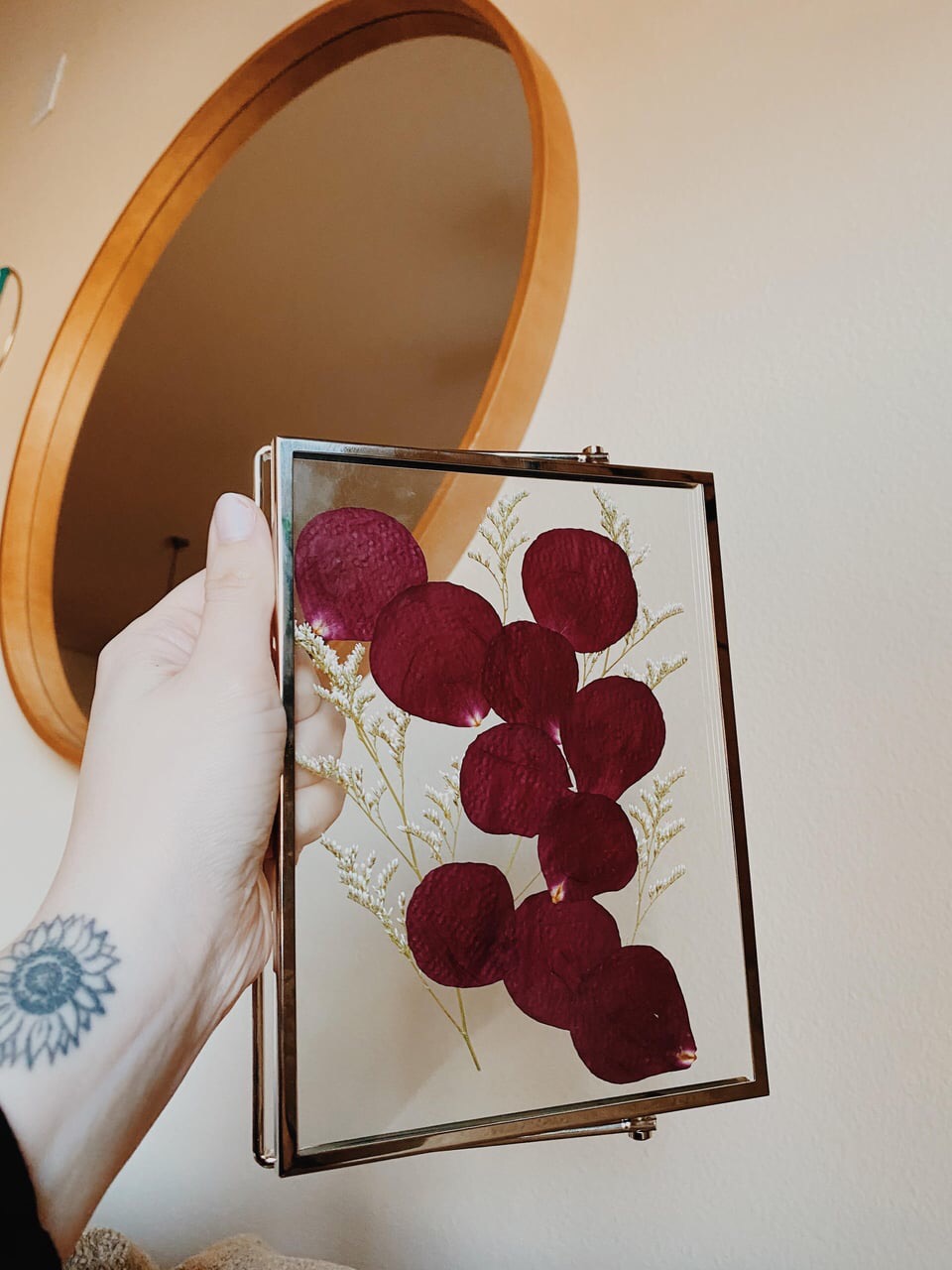
Pressing is the classic method for a reason. It’s cheap, simple and the results last for decades.
Flat flowers like pansies and daisies press well and look beautiful, and for bigger blooms like roses you can press the individual petals instead.
- Choose flowers that are fresh and free of blemishes, the day of or the day after the funeral if you can.
- Lay each bloom between two sheets of absorbent paper. Parchment paper or plain printer paper both work.
- Place the paper inside a heavy book then stack more books on top for extra weight.
- Leave them somewhere dry for two to three weeks. Don’t to peek too early or you might ruin it.
Once they’re pressed you can frame them, put them in a locket or mount them on card to make bookmarks and memorial cards. More on those below.
Air Dry Them
If you love the shape of a full bloom and don’t want it flattened air drying is the way to go. Roses and hydrangeas do especially well this way.
Get a small bunch, tie the stems together with string or a rubber band and hang them upside down in a dark, dry spot with a bit of air that flows around them.
A closet or a spare room works really well. Direct sunlight is the going to cause problems because it drains the color so make sure you keep them away from it. In two to three weeks you’ll have dried flowers you can put in a vase, no water required, for years to come.
Dry Them With Silica Gel
If you want your funeral flowers to keep their shape and their color, silica gel will do it. It’s the same stuff in those little “do not eat” packets and you can buy it in at any craft store.
Bury your blooms in a container of silica gel so the crystals support every petal, seal the lid and leave them for about a week. When you lift them out they look almost freshly picked.
It costs a little more than the free methods but the results are so beautiful and for one or two really special flowers it’s worth every penny.
Set Them in Resin
This one takes the keepsake idea and makes it something you can keep with you. Once your petals are dried you can encase them in clear resin to create pendants, rings, paperweights, bookmarks or Christmas ornaments. There are plenty of beginner resin kits out there and a small silicone mold is all you need to get started.
There is a bit of a learning curve with resin and your first pour might not be perfect. But a pendant holding a petal from your mother’s funeral spray, worn close to your heart, is the kind of keepsake that can become a family heirloom.
Frame Them or Build a Shadow Box
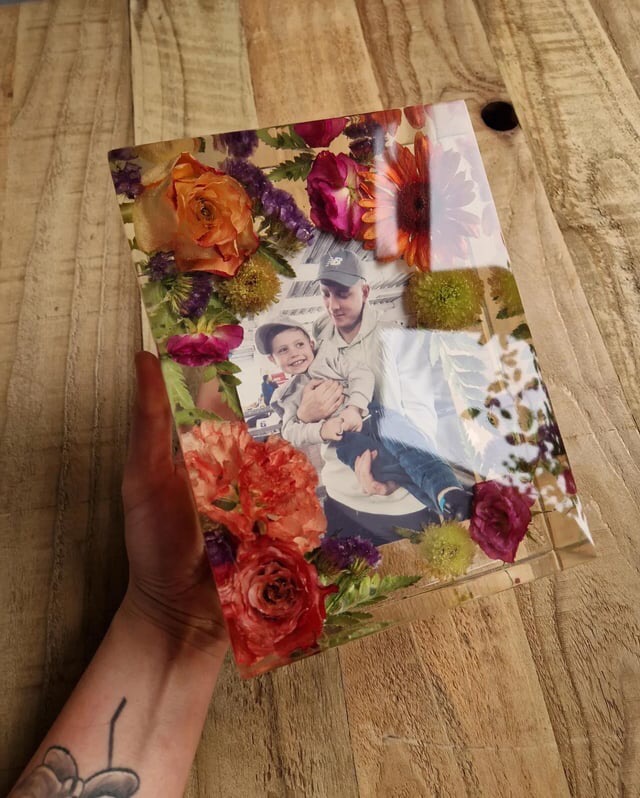
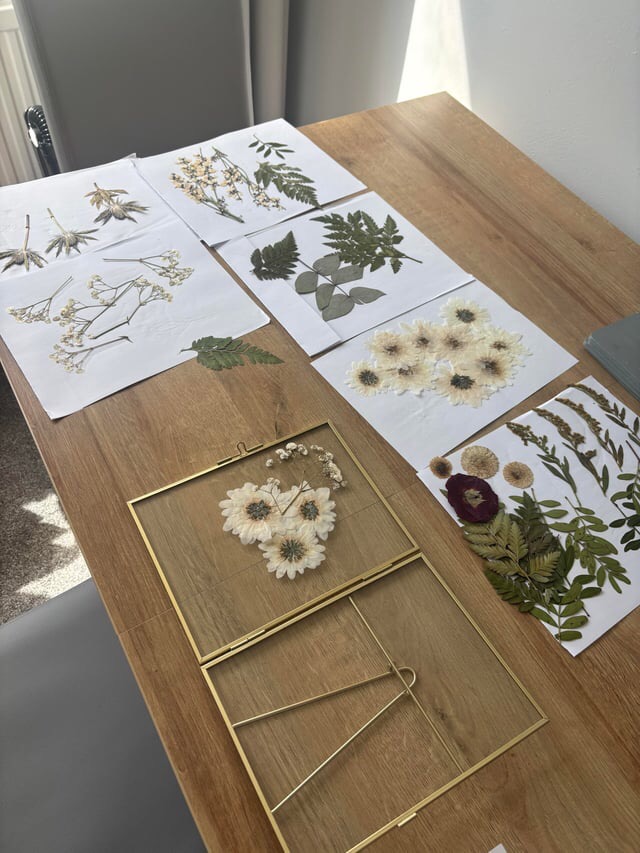
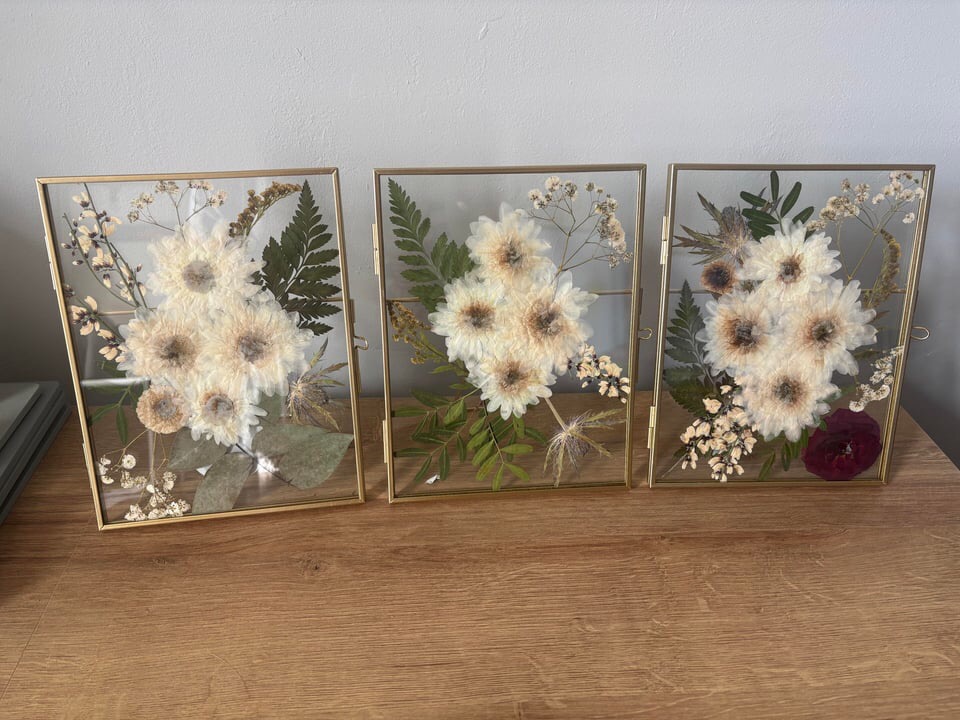
Pressed flowers arranged inside a frame make a piece of wall art you’ll treasure. You can keep it simple with a single bloom or arrange several petals into a collage.
Add a photo of your loved one, a line from their favorite quote or the date and you’ve made something you could never get in a shop.
If you’d rather keep whole flowers than pressed ones a shadow box means you can. Put in a dried rose alongside the funeral program, a photograph, maybe the ribbon from the arrangement and you’ve built a little memorial you can hang in the hallway or put on a shelf.
Make a Memory Jar
This is the easiest keepsake of the whole list and it’s the one I’d suggest if you’re feeling too tired to do anything fiddly. Dry a handful of petals, find a pretty glass jar or bowl and fill it. That’s all you do.
You can put a handwritten note in, a folded copy of the message you wrote on the flowers or a tiny photo. Put it somewhere you’ll see it and let it be a reminder.
Turn Them Into Bookmarks and Cards
Once you’ve pressed a batch of petals, laminating them between two sheets makes bookmarks that hold up to daily use. They also make heartfelt little gifts for other family members so everyone who loved your person can have a piece of the day with them. The same pressed petals can be mounted onto blank card stock to make keepsake memorial cards for anniversaries.
Candles and Potpourri
Dried petals scattered into a bowl make fragrant potpourri that scents a room and also works as a keepsake. And if you’re comfortable working with wax you can press dried petals onto the outside of a plain pillar candle or fold them into homemade candles for something you light on birthdays and anniversaries.
Professional Preservation Services
If the idea of doing it yourself feels like its too much much for you right now there are companies that specialize in preserving funeral and memorial flowers for you. They’ll dry or press your blooms and turn them into framed art, jewelry, glass ornaments or resin keepsakes.
It costs more than the DIY route but it takes the pressure off and the results are really lovely.
Share the Flowers With Others
You’re not the only person grieving and you don’t have to keep every flower yourself. You can give some of them to others.
Before you start any keepsake projects ask the other people who loved your person if they’d like to take an arrangement home, or even just a few stems. You might be surprised how many hands go up.
A brother, a best friend, a grandchild, all of them may really like something they can hold and none of them will think to ask. Offering first takes removes the awkwardness.
You can go a step further too. If you’re making pressed bookmarks or memory jars, make a few extra and give them to the people closest to your loved one. It turns your keepsake project into a gift and it’s nice knowing that pieces of the same flowers are sitting in homes all across the family.
Repurpose Them Into Smaller Arrangements
Not every flower needs to be kept forever. Sometimes the loveliest thing you can do is enjoy them a while longer at home.
Large sprays, crosses and wreaths can be taken apart and the flowers inside are often still fresh and beautiful. Once you’ve deconstructed them you can make up smaller bouquets in your own vases and jars and dot them around the house.
Got more than your home can hold? Make up a few little posies and give them to family members and close friends, especially anyone who was very close to your loved one but wasn’t able to take flowers home themselves.
If you’re sending a small arrangement home with someone it’s a nice touch to add a short note. Something simple like:
A few of Mom’s funeral flowers to keep. She’d have wanted you to have them.
******************
These were closest to Dad at the service. I thought of you straight away. With love.
******************
A little piece of a beautiful day to remember him by. Thank you for being there.
It doesn’t need to be anything special. Just something that lets them know the flowers meant something.
Donate the Flowers So They Bring More Comfort
If you can’t use all the flowers and the thought of them going to waste feels wrong then donating them is one of the most best things you can do. Those same blooms that comforted you can go on to brighten someone else’s very hard day.
Places that often welcome flower donations include:
- Nursing homes and assisted living facilities, where many residents rarely get visitors
- Hospices and hospitals, though you’ll want to check their policies first
- Places of worship, which may use them to decorate for a service
- Women’s shelters and community centers
- Local hospice or palliative care wards
One important note. Always call ahead before you show up with a load of flowers.
Some places have rules about fresh flowers for health and safety reasons. So make a quick phone call beforehand and it will save any an awkward moments.
Remember to remove the sympathy cards first so they stay private. Some florists and volunteer groups will even collect and redistribute funeral flowers, so it’s worth asking your florist if that’s something they offer.
If donating feels right to you it goes with the idea of asking loved ones to give to a cause your person cared about. If you’re the one making a gift our post on what to write when donating in memory of someone can help with the wording.
Leave Flowers at the Graveside
Some families like to move a few arrangements from the service to the final resting place be that the grave, a columbarium niche or wherever the ashes are laid. It’s a way to make sure the flowers are where your loved one is.
You can also use the moment to remember other family members. If relatives are buried nearby, and they are often in the same cemetery, carrying a few blooms over to their graves is a nice gesture.
Make sure to check the cemetery’s policy first as some have rules about fresh flowers, containers and how long arrangements can stay.
If you’re holding a separate committal or scattering you might find our piece on what to say when scattering ashes helpful for the words to go with it.
Give the Flowers Back to the Earth
Letting your funeral flowers return to nature is a full circle sort of moment and very fitting. If you’re not into crafting and keepsakes then these options might speak to you more.
Compost Them
The simplest and most eco friendly option of all. Once the flowers have faded add them to a compost pile or bin and let them break down into something that feeds new life.
Come spring the compost can be put on and nourish your garden.
Scatter the Petals Somewhere Meaningful
Petals can be scattered in a spot that meant something to your loved one, a favorite park, a garden they tended, a stretch of beach they loved etc.
Check local rules before you scatter anywhere public and stick to natural, biodegradable petals only. It can become a small, private ceremony all of its own.
Plant a Memorial Garden
This is my personal favorite. While the cut flowers themselves won’t regrow they can inspire you to plant something living in their honor.
Choose your loved one’s favorite blooms or plant forget-me-nots and make a corner of the yard as their space. Every spring it comes back and every spring you get to remember them all over again.
If you go this route a small marker makes it feel complete. Our guide to memorial plaque wording has lots of ideas for the words you might add.
To close a little verse I wrote for anyone planting in memory of someone they’ve lost:
so we gave them to the ground,
and every spring that follows
your love comes blooming round.
— Sympathy Message Ideas
When You Simply Can’t Keep Them
It’s worth emphasizing – you are allowed to throw the flowers away.
If you have no space or energy and no desire to press or dry or donate a single stem that does not mean you loved your person any less. Flowers are meant to be temporary. That’s part of what makes them such a fitting tribute.
They show up at the exact moment you need them and then, like the person you’ve lost, they have their season and they fade.
If throwing them in the trash feels too harsh then composting them or laying them at the graveside are good middle grounds. Cemeteries usually clear graveside arrangements within a week or so which is worth knowing so it doesn’t catch you off guard.
But feel guilty about it if you do throw them away. Take a photo, keep the cards and let the rest go.
If you’re finding the letting go harder than you expected that’s normal too and our page on grief support has more help for the days ahead.
What to Do With the Cards, Ribbons and Vases
It isn’t only the flowers you’re left with. There are usually cards, ribbons, floral foam and vases too. Don’t feel you have to keep all of it but there a few bits that are worth holding on to.
- The cards and gift tags are lovely to keep, at least for a while, so you have a record of who sent what when it’s time to write your thank you notes. If you’re unsure how long to hold on to them our guide on how long to keep sympathy cards goes through it.
- A ribbon or two from an arrangement can go into a shadow box or memory jar.
- Spare vases are always useful but if you’ve ended up with more than you need thrift stores are glad to get them.
- Floral foam, cellophane and wire can be thrown away as none of it is recyclable or compostable.
And once the flowers are sorted the people who sent them will appreciate a note of thanks. Our thank you for funeral flowers guide has wording examples to make that part easier.
A Few Questions People Often Ask
How long do funeral flowers last?
Most cut arrangements stay fresh for around five to seven days with water, sometimes a little longer if they’re kept cool and out of direct sun. That’s why it’s best to start any pressing or drying within a day or two of the funeral while the blooms are still at their best.
What should I do with the sympathy cards that came with the flowers?
Keep them. You’ll need them for your thank you notes and many people find they become keepsakes in their own right. Put them in a memory box, a scrapbook or a condolence book so you can look back on all the kind words in one place.
What about the potted peace lily or plant someone sent?
Living plants are easy because they don’t have to end. A peace lily, an orchid or a dish garden can live on for years as a reminder if you keep it watered and in decent light. If you don’t have a green thumb then gifting it to a family member who does keeps it in the family and takes the pressure off you.
Is it bad luck to keep funeral flowers?
No. There’s no truth to that. Keeping funeral flowers, pressing them, drying them or planting in their honor is a loving and completely healthy way to remember someone. Do whatever brings you comfort.
Final Thoughts
Whatever you decide the flowers already did their job. They arrived and told you that people were thinking of you.
Whether you press a single rose into a book, plant a whole garden, hand bouquets to the family or just take a photo and let them go, you’re honoring both the flowers and the person they were sent for.
And when you’re ready to write back to everyone who sent them we have a full guide to thank you notes for funeral flowers to help with that task too.