
When a friend passed away a few years ago I sent the family a peace lily. I didn’t think too hard about it at the time.
It was something I could easily grab from the florist and it looked nice enough. I couldn’t face choosing another bunch of cut flowers at the time.
What I didn’t expect was that the little plant would still be with them years later. The family have kept it and cared for it and every so often it gives them it’s beautiful white flowers. It’s become a living reminder of their loved one.
Giving a plant when someone has died is a gift that keeps growing long after the funeral is over. It becomes something the grieving person can care for and watch and hold onto.
So if you’re thinking about sending a plant instead of (or as well as) flowers, this guide will go through the best sympathy plants and what each one means. Because a lot of these plants have a symbolism behind them and choosing one with the right meaning can make a regular gift something really thoughtful.
Why Give a Plant Instead of Cut Flowers?
There’s absolutely nothing wrong with cut flowers. They’re beautiful, traditional and sometimes a big bouquet is the right gesture. If you’re leaning that way you might want to look at our guide on when to send flowers after a death and what to write on the card.
But a living plant offers a few things a bouquet can’t.
- It lasts. Cut flowers are lovely for a week and then they’re gone, which can feel like another loss on top of a big one. A plant can live for months or even years
- It’s something to care for. In the strange days after a death having a small living thing to water and tend can be comforting. It gives you something to do
- It’s a living memory. Many people come to associate the plant with the person they lost. It grows and changes the way a memory does and it becomes part of the home
- It travels well. A potted plant can be sent to a home, a funeral home or an office and it doesn’t need a vase or attention the moment it arrives
There’s also something to the symbolism itself. Where cut flowers are, by their nature, already fading, a growing plant can be seen as life continuing.
For a grieving family that feeling of “life goes on and so will you” can mean a great deal without anyone having to say it directly.
Humans have looked to the meanings of plants and flowers for a very long time. The Victorians turned it into a language, floriography, where every bloom and leaf carried a coded message, and much of that symbolism is still with us today. So when you choose a sympathy plant you’re tapping into meanings that go back generations.
Sympathy Plants and Their Meanings
The plants have different messages and a few have meanings you’d want to avoid. These are the ones that make the most thoughtful and appropriate sympathy gifts, along with what each one has come to represent.
Peace Lily
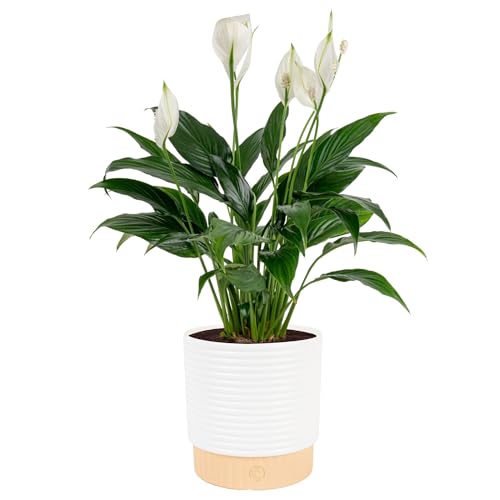
The peace lily is the classic sympathy plant. The name alone says most of what you need it to.
It represents peace, tranquility and the hope that the departed has found rest and it’s elegant white blooms have been linked with the idea of a soul at peace and rebirth.
It’s also a great plant to look after which is important when you’re giving it to someone who has a lot on their plate. It doesn’t mind low light, it tells you when it’s thirsty by drooping and then looks happy again after being watered and it cleans the air in a room. This is the one I sent my friends family and if you’re not sure which plant to choose you can’t go wrong with a peace lily.
One thing: peace lilies are mildly toxic to cats and dogs if they chew on them so they’re best for a pet free home or put out of reach.
White Orchid

An orchid feels a little more special which makes it a beautiful choice when you want to send something that reflects real affection. White orchids in particular carry meanings of love, beauty, refinement and eternal love so they work especially well for the loss of a partner, a parent or someone the recipient was very close to.
They also last a such long time. A phalaenopsis orchid can bloom for months and with a little care it will flower again year after year.
They look intimidating to keep alive but they’re less fussy than people think and usually just a splash of water once a week or the old trick of a few ice cubes on the roots will do.
Chrysanthemum
 Chrysanthemum (2 Pack) – Red Blooms
Chrysanthemums, or mums, are one of the most widely recognized flowers of mourning in the world. Across much of Europe and Asia they’re strongly associated with death and remembrance to the point where in some countries you’d only ever give them at a funeral.
White mums especially symbolize honesty, loyalty and grief and they’re a traditional choice for expressing sympathy.
A potted mum will give weeks of blooms and can later be planted out in the garden where it comes back each autumn. Just be aware of that strong cultural association.
If the family has any European heritage the a chrysanthemum is unmistakably as a funeral flower which in this context is what you want.
Potted Lily
 Potted Lily of the Valley Plant
Beyond the peace lily true lilies carry deep meaning at a time of loss. The white lily has long been a symbol of the restored innocence of the soul of the departed as well as purity and renewed peace.
It’s one of the most traditional funeral flowers there is and a potted lily gives all of that symbolism in a form that lasts longer than a cut stem.
The one caveat is that true lilies and daylilies are extremely toxic to cats. So if the household has a cat choose something else.
Succulents
 Non-Toxic Live Sempervivum Succulent Plant Gift in 8″ Decorative Pot
Succulents have become one of the most popular modern sympathy plants. They symbolize enduring, timeless love and resilience, the idea of a bond that survives even in hard conditions. That’s a lovely message to send someone grieving.
They’re also almost impossible to kill. A grieving person cannot be expected to remember to water anything and a succulent will happily forgive weeks of neglect.
A little dish of assorted succulents is a warm gift that says “I’m thinking of you” without adding one more thing for them to worry about.
Ferns
 4 Inch Pot Asparagus Fern Live Plant
Ferns don’t get talked about as much but they have a fitting symbolism. In the Victorian language of flowers a fern stood for sincerity, humility and a kind of lasting bond and their evergreen fronds have long been linked with eternal life. They ask very little in return just a shady spot and the occasional misting.
A Boston fern or a maidenhair fern brings green life into a home without the pressure of keeping flowers alive and the sincerity behind the gesture comes through.
Bonsai Tree
 Small Ficus Live Bonsai Tree, Potted Indoor Plant
A bonsai is a more unusual gift and a really meaningful one. These tiny trees represent harmony, balance, patience and endurance and because a well kept bonsai can live for decades it makes an extraordinary living memorial.
The person who receives it will still be tending it in twenty years and every time they do they’ll think of the one they lost.
It’s worth being honest that a bonsai does need a bit more attention than a succulent so it suits someone who finds comfort in caring for things rather than someone who’s overwhelmed. For the right person though few gifts say “this loss matters and will be remembered for a long time” quite so well.
Forget Me Nots
Sometimes the meaning is right there in the name. Forget me nots symbolize remembrance, true love and an enduring bond that death doesn’t break which makes them almost perfectly suited to a sympathy gift. Those tiny blue flowers have carried the message of “remember me” for centuries.
You can give them as a potted plant or, even more touching, as a packet of seeds the family can plant in a memorial spot in the garden. Every spring they come back, a small blue reminder that the person is still remembered.
Hydrangea
 Blue Hydrangeas Bouquet Flowers
A potted hydrangea is a generous gift that carries meanings of heartfelt emotion, gratitude and deep understanding. It’s a way of saying “I feel this with you” which is sometimes exactly the sentiment you’re reaching for and can’t put into words.
Better still once it’s finished flowering indoors it can be planted out in the garden, where it grows into a proper shrub that blooms every year for a lifetime. That transition from indoor comfort gift to permanent living memorial is part of what makes it special.
Rosemary
 Tuscan Blue Rosemary Live Plant
Rosemary has been the herb of remembrance for a very, very long time, famously so, and it still turns up at funerals and memorials today. A small potted rosemary is an understated gift and it’s a hardy little thing that will grow into a fragrant bush the recipient can cook with, brush past in the garden and remember by.
There’s something comforting about a remembrance plant you can actually use in everyday life. Every time they snip a sprig for the roast potatoes there’s a quiet moment of remembering.
Ivy

Evergreen ivy symbolizes fidelity, undying affection and eternal life and because it clings and endures through all seasons it’s long been associated with a love that outlasts death. It makes a hardy, trailing houseplant that asks almost nothing of its owner.
It’s a particularly fitting choice for the loss of a spouse or a lifelong friend, where that message of enduring devotion really hits home.
Gardenia
 Perfect Plants Jubilation Gardenia Live Plant
Gardenias represent purity and gentleness and their fragrance makes them a tender expression of sympathy. They’re best suited to someone who’ll appreciate a little beauty and scent in the house, and who has the patience for a slightly more particular plant.
A word on the fragrance though. Gardenias are strongly scented so they’re wonderful in an airy room but can be overwhelming in a small space. Worth bearing in mind depending on where it’ll live.
Roses (Potted or a Rose Bush)
 Knock Out 2 Gal. Rose Pink Shrub
Everyone knows roses as flowers but a potted rose or a rose bush makes a lasting sympathy gift with all the symbolism intact. White roses in particular carry meanings of reverence, purity, remembrance and honor, which is why you see so many of them at funerals. A deep red rose speaks of love and respect, and a pale pink of grace and admiration.
Give a rose bush and the family can plant it somewhere meaningful where it blooms every summer in memory of the person. It becomes a fixed point in the garden that belongs to them.
Azalea
 Encore Azalea 2 Gal. Autumn Embers Shrub
The azalea is a beautiful flowering shrub that carries a gentle, caring message, often read as “take care of yourself” and a wish for the recipient’s wellbeing. In some traditions it also stands for the fragile, precious nature of life, which gives it a quiet poignancy at a time of loss.
As a potted plant it puts on a generous display of blooms, and afterwards it can go out into the garden. It’s a way of wrapping a wish for someone to be gentle with themselves into a living gift.
Dish Gardens and Mixed Planters
If you can’t decide on one plant a dish garden, which is a shallow bowl planted with a mix of small greenery, is a lovely and very practical option. It lasts far longer than a bouquet, it needs little care, and it brings a small piece of living green into the home. Many combine a few of the plants above, so you get several layers of meaning in one gift.
These are also a good choice when you’re sending something to a funeral home or a family you don’t know well, since they’re universally welcome and don’t rely on the recipient being a keen gardener.
Sending a Memorial Tree
If you want to give something that will outlive everyone reading this a tree is the ultimate living memorial. You can send a sapling for the family to plant or arrange for a tree to be planted in a forest or memorial grove in the person’s name, which is a wonderful option when the family doesn’t have a garden of their own.
Certain trees carry their own meanings. A weeping cherry, with its graceful drooping blossom, has a naturally sorrowful, tender beauty. A Japanese maple offers stunning color and calm. A dogwood carries gentle associations in Christian tradition, and an oak stands for strength and endurance. Whichever you choose, a tree grows for generations, and the family can visit it, sit under it and watch it change with the seasons for the rest of their lives.
A memorial tree also doubles as a gesture when the family has asked for donations rather than flowers. If that’s the situation you’re in our guide on in lieu of flowers alternatives and etiquette is worth a read as is the piece on what to write when making a donation in memory of someone.
How to Choose the Right Sympathy Plant
With so many options it can be hard to decide on one, so this is how to make the right choice:
- Consider the recipient’s ability to care for it. Someone deep in grief has little energy to spare. If in doubt choose a low maintenance plant like a succulent, a peace lily or a snake plant over anything fussy
- Think about the light in their home. If you know they’ve got a bright, sunny place, an orchid or succulent will thrive. A darker home suits a peace lily or a fern far better
- Let the meaning guide you. If the symbolism matters to you pick the plant whose meaning fits the relationship. Forget me nots and rosemary for remembrance, orchids for a lost partner, ivy for lifelong devotion
- Check for pets and small children. This is important and it has its own section below
- Match the scale to the relationship. A small succulent for a colleague, a substantial orchid or a memorial tree for someone very close. You’ll find more on this in our sympathy gift etiquette guide
If you’re still torn between a plant and something else entirely our roundups of sympathy gift ideas and unique sympathy gift ideas have lots more to consider.
A Word of Caution: Plants and Pets
A number of common sympathy plants are toxic to pets, and one in particular can be deadly.
True lilies and daylilies are extremely dangerous to cats. Even a tiny amount, a nibbled leaf, a lick of pollen off their fur, or the water from the vase, can cause fatal kidney failure. If the household has a cat do not send a true lily under any circumstances. It’s not worth the risk.
Peace lilies are a different plant despite the name and while they’re not deadly like true lilies, they can still cause painful mouth irritation and sickness if a cat or dog chews them. Other plants to place out of reach in a home with pets or curious toddlers include azaleas, ivy and certain succulents.
The safe move, if you know there are animals or young children in the home, is to choose a pet friendly option. Ferns, most true succulents, orchids and a rosemary plant are all much safer bets. When in doubt, a quick check of the plant against the ASPCA’s toxic plant list before you buy takes two minutes and saves a lot of heartache.
What to Write on the Card
A plant almost always goes out with a small card and it’s easy to struggle with what to put on it. Best is to keep it short and simple. A plant speaks for itself so the card just needs to add a personal touch.
Something like “Thinking of you and your family. This plant comes with all my love” is plenty. Or you might nod to the symbolism: “A peace lily, for peace and for remembering. With deepest sympathy”. If your relationship is closer you can be more personal and mention the person by name.
For a lot more wording you can take a look at our sympathy card messages and our collection of funeral flower messages which work just as nicely on a card tucked into a plant. If you’re not sure how to close it our guide to what to write in a sympathy card covers all of it from opening to signature.
Sympathy Plants for the Loss of a Pet
Grief over a pet is real grief and a living plant can be a beautiful way to acknowledge it. A small tree or a hardy perennial the person can plant in the spot where their pet loved to lie makes a gentle, lasting memorial. Forget me nots and rosemary work just as well here for their message of remembrance.
If it’s a pet loss you’re marking our pet loss gift ideas guide has more thoughtful suggestions alongside the plants.
Caring for a Sympathy Plant
One thing you can add to any plant gift is a little care note because the last thing a grieving person needs is the guilt of accidentally killing a plant that meant something. Put down the basics on the card: how often to water it, whether it likes bright or low light, and reassurance that it’s a forgiving plant if that’s true.
For the very forgetful, or the very overwhelmed, go toward the plants that thrive on neglect. A snake plant, a ZZ plant, a pothos or a dish of succulents will survive almost anything, and there’s real comfort in giving something that won’t become one more thing to feel they’ve failed at.
Final Thoughts
There’s no perfect gift for grief because nothing you send can fix what’s happened. But a living plant comes close to the right idea.
It says life continues and it gives the bereaved something green and quiet to care for when everything else feels impossibly heavy.
If you’d like more support beyond the gift our grief support resources and our thoughts on what to say when someone dies can help.